
The fastest way to start an LLC today begins with knowing which part of the process you want to accelerate. Preparing an application, having a service submit it, and receiving state approval are different events. A provider’s quick order form does not establish when the government will accept a filing. Before paying for speed, identify the state, the required information, the available official filing options, and the exact milestone described in the advertised turnaround.
Explore bicycle flipping with this related channel video. Its title describes the original video; it does not establish expected earnings.
Open the related bicycle flipping video watch page
This guide is an organizational checklist, not a determination that an LLC is the right structure for you. Your location, ownership, business activity, and other circumstances matter. Consult appropriate legal or tax professionals when choosing a structure or resolving specific questions. The goal here is to make your preparation clearer, compare actual service promises, and avoid confusing formation paperwork with a complete business launch. You still need an offer, customers, and a workable delivery process.
Define the event you need completed
Write down whether your deadline concerns preparing documents, submitting an application, receiving approval, opening an account, or beginning a particular activity. These events may depend on different people and systems. A vague request to start immediately can lead you to buy a service that accelerates the wrong step. A defined milestone makes the question easier to ask and the provider’s answer easier to evaluate.
Explain the reason for the deadline to an appropriate adviser if the timing has legal or contractual significance. Do not assume a pending application has the same effect as an approved filing. If you do not understand the status required for your intended next step, resolve that question before proceeding. Speed is useful only when it helps you reach the correct milestone with accurate information and an appropriate plan.
Confirm the relevant jurisdiction first
Use official state resources to investigate where and how your intended entity should be formed. Do not choose a jurisdiction solely because a promotional page describes its process as easy. Your actual operations may create additional questions elsewhere. A general internet article cannot determine the appropriate setup for every owner. Ask a qualified professional when the business will involve multiple owners, multiple locations, or circumstances you do not understand.
Keep the official source in your preparation notes. Record the required document name, current filing route, stated fees, and any published processing information. Dates matter because procedures can change. This note is not a substitute for the application instructions; it is a way to organize them. Return to the responsible authority before paying or submitting rather than relying on a screenshot or remembered price from an earlier search.
Prepare the information before opening checkout
Review the official form and identify what must be decided or collected. Business name, addresses, ownership-related information, and agent details may require attention depending on the jurisdiction and filing. Use the actual instructions rather than a generic checklist as the final authority. Mark any field you cannot answer confidently. An incomplete decision should remain a question rather than become a guessed answer entered to keep the order moving.
Keep a separate list of questions for your adviser or the filing office. Ask focused questions tied to the form or requirement. For example, identify the field and explain what is unclear without sending unnecessary personal information. Better preparation can reduce avoidable back-and-forth. It also helps you distinguish a provider that merely submits your supplied information from a service that includes the particular guidance you need.
Review the name before building the brand
Investigate the relevant naming requirements through official resources and consider whether other name-related issues need professional review. A domain being available does not establish that a business name is suitable for every purpose. Avoid spending heavily on printed materials while essential name questions remain unresolved. Keep the proposed name and alternatives together so you can respond efficiently if the filing process identifies a problem.
Separate the legal name decision from the customer-facing explanation of your offer. You can research customer needs and draft a service description while the formal setup is being considered. Those activities do not require you to pretend the entity already exists. Accurate status language helps you prepare without making claims about approval before you have the relevant confirmation from the responsible authority.
Compare direct filing with a formation service
A formation service may help organize information and submit documents. Direct filing may be another route to investigate through the state. Compare the actual tasks, guidance, cost, and time involved in each option. Do not assume that paying an intermediary changes the government’s processing queue. Ask exactly what the service does and what remains your responsibility after the order is placed.
Use the SBA launch guide to identify the broader areas you need to examine, including structure, registration, tax identification, licensing, banking, and insurance. Formation is one part of that work. The guide is a starting resource; your official state and local requirements and professional advice should inform the decisions that apply to your specific business.
Read expedited promises carefully
Ask whether an advertised rush option accelerates the provider’s internal handling, purchases an available government expedited service, or both. Get the milestone and conditions in writing. Identify what happens if the application needs correction or if the state processing estimate changes. The word fast is not specific enough to tell you what you are buying or when you can responsibly plan the next dependent step.
Do not treat a promotional turnaround as an unconditional approval guarantee. Keep a dependency list for tasks waiting on the result. If a deadline is essential, ask the responsible authority and your adviser what can be confirmed. A clear description of uncertainty is more useful than a confident date that ignores exceptions. Your plan should accommodate the actual process rather than the most optimistic wording in a checkout banner.
Separate one-time and recurring charges
Compare the total amount due now with any later renewals or optional subscriptions. Ask which services are included and whether they continue automatically. A low advertised formation fee can coexist with government charges and separate services. Read the final order carefully and keep the receipt and terms. You should be able to explain what each charge buys before agreeing to it.
Do not purchase every add-on simply because the page presents it as part of a convenient launch. Identify which requirement it addresses, whether you need it, and what alternatives exist. When a decision involves legal or tax suitability, seek appropriate advice instead of treating the provider’s packaging as a personalized recommendation. Organization is helpful, but a bundle does not remove the need to understand the choices inside it.
Plan the work after the filing
Create a post-submission checklist based on the actual requirements you identify. It may include monitoring status, responding to corrections, saving approved documents, and investigating subsequent obligations. Assign a date or trigger to each task. Do not assume the process ends when a payment confirmation arrives. An order receipt shows an order; you still need to understand the status of the underlying filing.
Keep your records accessible and distinguish drafts from submitted and approved documents. This reduces confusion when you later need information for an account, adviser, or official request. Use clear filenames and dates rather than a folder full of similarly named downloads. A simple record system is especially useful when several steps involve the same business details and you need to know which version was actually accepted.
Build the customer offer alongside the administration
An LLC filing does not explain what your business sells or why someone would buy it. Write a clear offer with the customer, deliverable, boundaries, and next step. Research actual demand and the work required to deliver. This planning can proceed while you investigate the formal setup, provided you remain accurate about your status and do not begin activities before meeting applicable requirements.
For a bicycle-flipping business, the operating questions include identification, condition assessment, ownership, transport, storage, accurate listings, and buyer handovers. A registered entity does not perform those tasks for you. Likewise, a service business still needs scope, scheduling, quality checks, and customer communication. Treat formation and operations as connected workstreams with different purposes, rather than assuming one completes the other.
Choose business education for the process you intend to learn
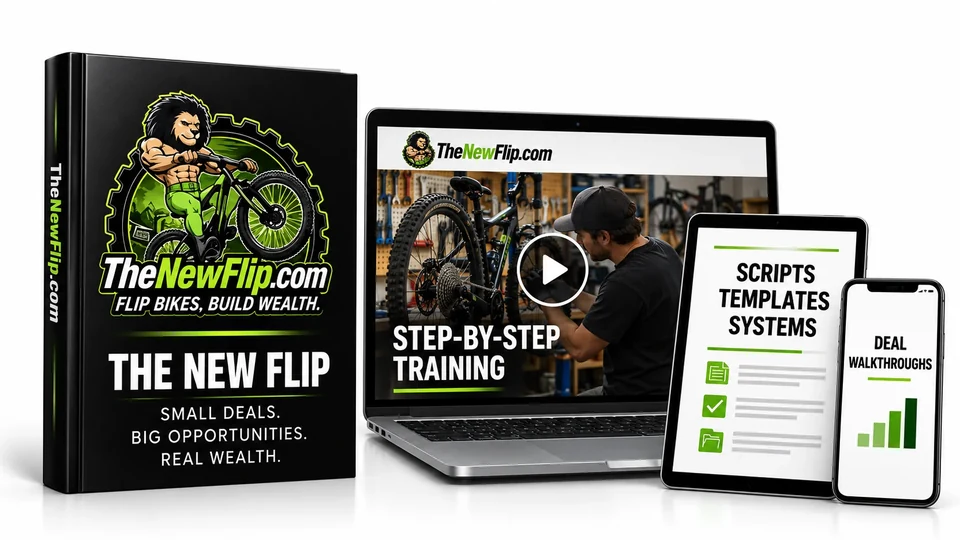
If bicycle flipping is your learning project, explore The New Flip Complete System and Bicycle Flipping Academy training. The $199 one-time offer is shown against a listed $1,500 comparison price, a $1,301 difference. Review the included book, videos, scripts, templates, and training materials. These are educational resources and are separate from LLC filing, professional advice, coaching, or hosted technology services.
For free property education, start the seller financing course at My Real Estate Dojo. Choose the resource that matches the skill you want to study. Learning a buying-and-selling process does not determine the appropriate legal structure for your circumstances. Keep those decisions distinct and use qualified guidance for the specific legal or tax questions your business raises.
Make today’s progress concrete
Today, you can define the milestone, locate the official instructions, identify missing information, and compare the scope of available filing routes. Record what is confirmed and what needs an answer. That is useful progress even if approval cannot occur on your preferred date. The fastest responsible path is the one that avoids preventable mistakes while reaching the correct next step with information you can support.
When you are ready to study the operating side of bicycle flipping, review The New Flip Complete System. You can also begin the free seller financing course. Use education to understand the work behind a business while you complete the appropriate formal preparation. A clear offer, accurate records, and a realistic process matter after the filing as much as before it.

