
What is the cheapest business to start? The answer depends on what you already know, own, and can responsibly deliver. A service that uses an existing skill may require fewer new purchases than an inventory business. Yet a low purchase price does not establish low total cost. Training, required tools, operating obligations, customer acquisition, and unfinished work all belong in the comparison. Start with the cost of reaching and serving one customer rather than the advertised price of a business idea.
Explore bicycle flipping with this related channel video. Its title describes the original video; it does not establish expected earnings.
Open the related bicycle flipping video watch page
This guide offers a practical comparison method rather than a universal winner. You will examine a defined service, an educational offer based on existing knowledge, and bicycle resale as different starting points. The examples are planning exercises, not earnings forecasts. The New Flip provides bicycle-flipping education, but learning materials and later operating costs should be evaluated separately. Your goal is to choose a manageable test without overlooking an essential responsibility simply because the initial budget is small.
Begin with the resources already available
List the tools, knowledge, time, and space you can use consistently. A laptop, spreadsheet ability, or subject expertise can support different offers. Appropriate storage and product knowledge may support a resale activity. Do not count resources you only hope to obtain. A clear inventory shows which ideas require new spending and which can be investigated with what you actually control today.
Also record limitations. A borrowed tool may not be available when a customer needs the work. Shared space may not support inventory. A skill may need further practice before delivery is reliable. The cheapest-looking idea can become expensive when it depends on unavailable resources. Your comparison should describe the actual version you could operate, rather than an ideal version with free equipment and unlimited time.
Compare defined offers instead of broad categories
A broad label such as online business can hide many arrangements. Narrow it to a deliverable. An organization service could prepare a particular spreadsheet from supplied information. A lesson could cover one skill you understand. A resale could offer one accurately described bicycle. The more specific the task, the easier it is to identify required inputs, tools, knowledge, and completion work.
Write each offer on a separate page using the same headings: customer, result, existing resources, missing requirements, direct costs, shared costs, and first test. Consistency matters. Do not compare one fully documented idea with another represented only by its most attractive advertised fee. The purpose is to expose the work and expenses that the category name does not explain.
Examine a service built on an existing skill
A narrow service can be investigated through a sample before making major purchases. Use fictional or your own information and complete the task from start to finish. Record preparation, checking, and communication time. Ask whether the output is useful and whether you can explain what the customer provides. This exercise can reveal a missing skill or an unclear boundary before you commit to a paid project.
A sample does not establish demand. You still need to understand who needs the result and how they would find you. Have appropriate customer conversations about the actual problem and desired output. Avoid assuming the service is cheap simply because it has no inventory. If reaching customers or completing revisions requires substantial effort, that work belongs in your personal comparison even when it does not create an immediate cash expense.
Examine teaching a skill you already know
A focused lesson may use existing knowledge and materials you can prepare yourself. Define the learning goal, the expected preparation, and the limits of your expertise. Do not promise an outcome you cannot control. Practice explaining the subject to someone unfamiliar with it. The exercise helps you understand whether you can deliver the lesson clearly and whether additional preparation is needed.
Include the time spent planning exercises, communicating, and following up. The visible appointment is only part of the work. If appropriate tools or permissions are needed, identify them before offering the lesson. A small budget should shape the scope, not justify teaching a subject beyond your competence. The useful question is which specific learning result you can responsibly support with the resources you have.
Examine a bicycle-resale opportunity
Bicycle flipping involves a purchase decision and the possibility of unsold inventory. Start by researching one actual item without assuming you must buy it. Identify the model, size, ownership questions, condition information, and relevant comparisons. Keep seller statements separate from facts you confirm. A low advertised price may deserve investigation, but it does not establish the complete cost or suitability of the opportunity.
If you consider proceeding, include inspection, collection, transport, storage, preparation, listing, appointments, and handover. Get qualified help when a mechanical or structural concern is outside your ability to assess. A free bicycle can still require work and expense. Comparing purchase prices alone may make an unsuitable item appear cheaper than an option whose total responsibilities are better understood.
Distinguish required purchases from optional conveniences
For each proposed purchase, write the task it enables. Ask whether the task is essential for the first test and whether an existing resource can perform it appropriately. Some tools may improve convenience without being necessary immediately. Others may be essential for responsible delivery. Do not treat every checkout suggestion as a requirement or every expense as something you can safely ignore.
Use the same discipline with software subscriptions. A small monthly charge can continue beyond the initial experiment. Record renewal timing and cancellation conditions before buying. If you do not yet understand the process the tool will support, practice the workflow first where feasible. You can then judge whether the software solves an observed problem rather than buying it as a substitute for defining the work.
Include the operating requirements
Research the official requirements for your activity and location. Business structure, registration, permits, insurance, tax setup, and other obligations may need attention. Use responsible authorities and qualified professionals for decisions specific to your situation. A general low-cost business list cannot establish which requirements apply to you. Keep unresolved questions visible instead of assuming a small operation has no formal responsibilities.
Build a requirements record showing the source, the question, the potential cost, and the next action. If an essential condition cannot be met within your resources, choose a preparation exercise or a different offer. The cheapest responsible route may be learning first rather than operating immediately. A low initial budget does not make an incomplete operating plan ready for a customer commitment.
Learn the process before buying more inventory
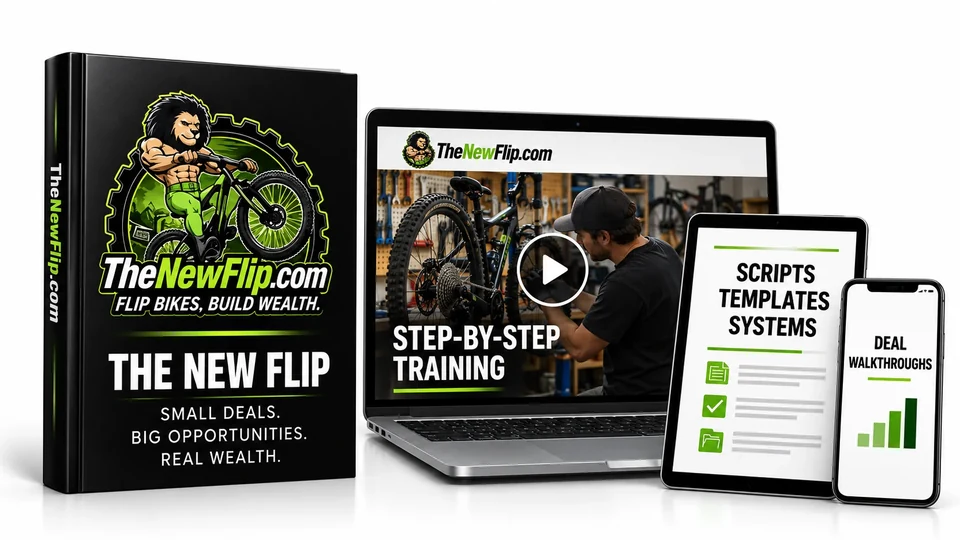
If bicycle flipping is the subject you want to understand, explore The New Flip Complete System and Bicycle Flipping Academy training. The $199 one-time offer is shown against a listed $1,500 comparison price, a $1,301 difference. Review the book, videos, scripts, templates, and training materials. Treat the education purchase as a separate cost from any bicycle, transport, preparation, or selling expenses.
For free property education, start the seller financing course at My Real Estate Dojo. Free access to education does not mean a later transaction has no costs or responsibilities. Choose the resource that addresses a specific learning question. Learning can help you identify what an activity requires before deciding whether the full process fits your circumstances.
Compare the cost of the first complete cycle
Define one complete cycle for each idea. A service cycle might include finding a customer, clarifying scope, preparing the work, delivering, managing an agreed revision, and recording the result. A resale cycle includes the work before purchase and after listing. List the expenses and time across the whole sequence. This avoids making the business appear cheap by stopping the calculation at the easiest stage.
Include unsuccessful attempts where they occur. You may investigate several listings or discuss several projects before completing one. That effort is part of understanding the activity. Do not assume the first inquiry becomes a sale or the first item sells on your preferred date. A realistic first-cycle comparison can remain hypothetical, as long as assumptions are labeled and you identify how to test them.
Consider what happens if the test stops
Before spending, ask which commitments remain if you decide not to continue. You may have an unsold item, unused supplies, a recurring subscription, or an unfinished customer obligation. Identify how you would handle each. This is a practical planning question, not a prediction of failure. It helps you choose a test whose remaining responsibilities you can manage if the idea proves unsuitable.
Keep the first experiment limited enough to review honestly. Buying more equipment because you already purchased some does not resolve a weak offer. Adding inventory does not finish the listings already waiting. Review the evidence and decide what needs changing. A decision to stop or narrow the activity can preserve resources for a better-matched option rather than turning an inexpensive test into an expanding commitment.
Choose the cheapest suitable experiment
The cheapest business to start for you should be evaluated through existing skills, required responsibilities, and the first complete customer cycle. Compare a small number of defined offers using the same categories. Choose an experiment that answers an important question without requiring a commitment you cannot manage. Record what happens, including the time and costs you initially overlooked, and use that evidence for the next decision.
If bicycle flipping is your chosen learning project, review The New Flip Complete System before deciding whether a paid resource fits. For a free educational starting point, begin the seller financing course. Focus on understanding the work and the customer. A modest, informative test is more useful than a cheap-looking launch whose essential requirements remain unexplained.

