
Small business hiring platforms solve different parts of the hiring process. A job board can help people discover an opening. A sourcing tool can help you search for candidates. An applicant-tracking system can organize the process after applications arrive. Before comparing brand names, identify the role, the work arrangement, and the step that needs help. A platform cannot define an unclear job or replace the judgment needed to evaluate candidates consistently.
Explore bicycle flipping with this related channel video. Its title describes the original video; it does not establish expected earnings.
Open the related bicycle flipping video watch page
This guide explains how to build a comparison around your actual workflow. It includes official examples from LinkedIn and Workable without claiming one service is best for every business. Features, eligibility, and prices can change, so verify the current offering directly before buying. For specific employment, classification, pay, or legal requirements, use the relevant authorities and qualified professionals. The operational goal is a hiring process you can explain, manage, and review with appropriate care.
Define the work before posting the opening
Write down the tasks the person would perform and the outcome the business needs. Avoid turning a collection of unrelated frustrations into a single job description. A role responsible for customer messages may need different availability and skills from one preparing inventory records. Identify what happens regularly, what requires judgment, and what should remain with the owner. This makes the opening more understandable to candidates.
Then describe the resources and supervision available. Who answers questions, checks the work, and sets priorities? A new person cannot succeed merely because the owner wants less to do. If the workflow is undocumented, prepare examples before hiring. Clear responsibilities help you judge whether a platform’s audience and tools fit the actual role rather than a vague title that could mean many different jobs.
Distinguish posting from sourcing
Posting invites people to respond to a described opportunity. Sourcing involves identifying and approaching potential candidates through an appropriate channel. The two can support different needs. An occasional opening may require a different setup from repeated hiring for specialized work. Decide which activity you actually intend to perform before paying for a tool whose main capabilities you may not use.
LinkedIn’s small-business hiring page distinguishes its job-posting offering from sourcing-oriented products such as Recruiter Lite. Use the official descriptions to identify a possible fit, then check current conditions and pricing. Do not treat the product category alone as proof that it will produce suitable applicants. Your role description, requirements, and hiring process remain important parts of the result.
Understand what applicant tracking adds
Applicant tracking can help organize candidates, stages, notes, and next actions. The relevant question is whether your current process needs that structure. If several people review applications, shared visibility may matter. If you hire occasionally, a simpler arrangement may be easier to maintain. Compare the work you actually need to coordinate instead of assuming every business requires the most extensive hiring system.
Workable’s official job-board documentation describes distribution options and conditions for particular boards. Read those conditions rather than assuming every listing receives identical placement. A distribution tool and a destination job board have different roles. Ask how the proposed setup handles applications, updates, and any separate requirements associated with the channels you intend to use.
Build a shortlist using practical requirements
Create a comparison sheet with the role, hiring frequency, expected reviewers, necessary stages, and communication needs. Add any requirements for file handling, reporting, exports, or integrations. Mark each as essential or optional. This prevents a long feature list from replacing the actual decision. A useful platform should support the process you can maintain, not encourage complexity merely because the capability exists.
Test the shortlist with a fictional opening before sharing real candidate information. Walk through creating the role, reviewing a sample application, recording a decision, and finding the next task. Notice confusing steps and duplicate work. A demonstration can look polished while leaving ordinary actions unclear. Your test should show whether the tool makes the daily workflow understandable to the people who will actually use it.
Write criteria before reviewing applicants
Decide which job-related evidence matters for the role and how it will be assessed. Keep the criteria connected to actual tasks. For example, a role preparing product records may need accurate organization and clear written communication. Avoid relying on a vague impression of fit when you have not defined the work. A consistent process is easier to explain and review than shifting standards applied differently across candidates.
If using a work sample, make its scope, purpose, and treatment clear and ensure the arrangement is appropriate for the circumstances. Do not quietly turn an evaluation into unpaid operational work. Ask qualified professionals about relevant employment requirements and hiring practices. A platform may provide forms and stages, but the business remains responsible for designing and using a suitable evaluation process.
Plan candidate communication
Decide who acknowledges applications, schedules discussions, answers questions, and communicates next steps. State realistic timing rather than promising immediate replies if nobody can provide them. Candidates should understand where the process stands and what is expected. A hiring tool can help organize messages, but it cannot correct a process with no assigned owner or a role whose requirements keep changing.
Prepare a small set of accurate messages and review them before use. Avoid making commitments the business has not approved. If a template no longer fits the stage, edit it rather than sending it automatically. Keep records of important communications in the appropriate system. This reduces confusion when several people participate and helps you distinguish a planned next step from something already communicated.
Compare the full cost of the workflow
List the subscription, advertising, additional-user, integration, and other applicable costs. Verify what is included and what renews. A headline price may not describe the arrangement you need. Record the current quote and the conditions attached to it. If the service offers a trial, understand when it ends and which actions create a payment obligation before entering an ongoing setup.
Include the time your team spends maintaining the system. A tool can add work if information must be copied repeatedly or reviewers cannot find their next task. Test the ordinary workflow, not only the initial posting. The cheapest subscription is not necessarily the lowest total operating burden, and the most expensive plan is not automatically suitable. Match the decision to observed needs and a clear budget.
Protect access to applicant information
Identify who genuinely needs access and which records they need to see. Use the platform’s appropriate account and permission options rather than sharing one login broadly. Review how information can be exported and removed according to your applicable obligations and policies. Candidate records deserve deliberate handling. A convenient tool should not become a reason to collect more information than the hiring process requires.
Avoid including unnecessary sensitive details in internal notes. Keep observations factual and job-related. If you are unsure about retention, privacy, or other requirements, seek appropriate guidance for your location and circumstances. The platform may offer controls, but those controls need a considered process behind them. Define who manages access and what happens when a reviewer no longer participates in hiring.
Prepare onboarding before making the role live
A hiring platform helps with recruitment, but the person still needs a clear start. Prepare the task instructions, examples, tools, and contact for questions. Identify the first manageable assignment and how its completion will be checked. Without that preparation, the business may attract a suitable person and then leave them unable to perform because the workflow exists only in the owner’s memory.
Use a short onboarding checklist with observable steps. Access granted, instructions reviewed, sample completed, questions resolved, and first output checked are clearer than a broad statement that training happened. Adjust the checklist to the role. The purpose is to help the new person understand the work and help you notice missing support before assuming a performance problem belongs entirely to the person.
Understand your own process before adding people
For a bicycle-flipping business, the owner should understand research, assessment, accurate records, listing preparation, and handover arrangements before deciding which tasks to delegate. Some responsibilities require product knowledge and judgment. A job description should reflect those differences. Hiring someone to organize records is not the same as asking them to make purchase or safety decisions without appropriate knowledge and supervision.
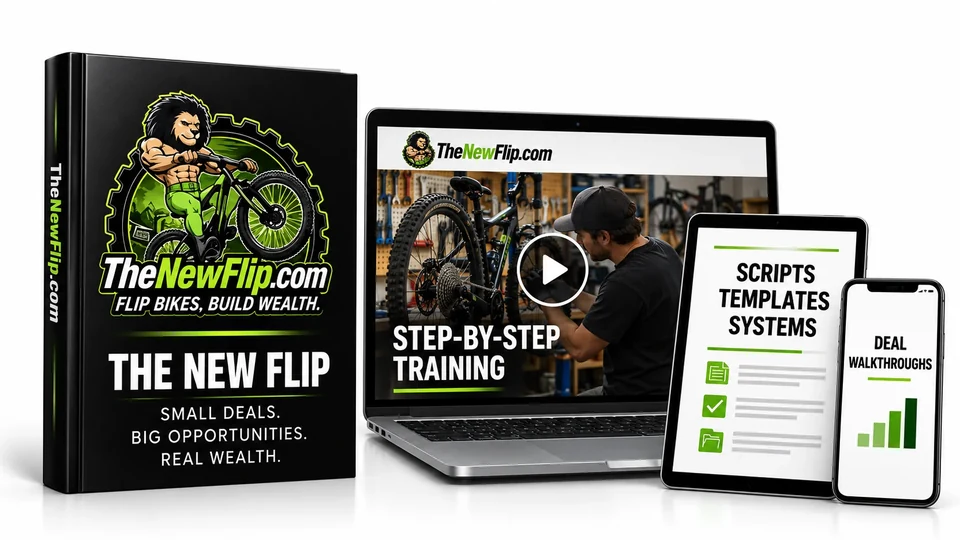
If you want structured education around that business process, explore The New Flip Complete System and Bicycle Flipping Academy training. The $199 one-time offer is shown against a listed $1,500 comparison price, a $1,301 difference. Review the book, videos, scripts, templates, and materials. The educational package is separate from hiring software, legal advice, employee management, or a promise of business results.
Choose a reviewable next step
Select the hiring step that needs help, define the role, and test a small shortlist using the same workflow. Verify current terms directly and ask for clarification where the offering is unclear. Keep the final decision connected to the actual work, the people managing the process, and the costs you can support. A platform is useful when it serves a clear process rather than becoming the process itself.
For business-learning resources, review The New Flip Complete System, or begin the free seller financing course for property education. You can also explore the free course before choosing further training. Connect education to a specific responsibility you want to understand, then use your own records and appropriate professional guidance when building the operating business.

