
How can a beginner start a business? Start by designing one complete customer process you can understand and manage. Identify a person with a specific need, explain what you can provide, prepare to deliver it, and keep a record of the result. That is a more useful starting point than choosing a business title without knowing the ordinary work behind it. Your first objective is to learn the process well enough to make informed decisions about the next commitment.
Explore bicycle flipping with this related channel video. Its title describes the original video; it does not establish expected earnings.
Open the related bicycle flipping video watch page
Being new to business does not mean having no useful experience. You may already know how to organize information, explain a subject, complete practical tasks, or assess certain products. The business learning begins with turning that ability into a clear customer offer and managing the responsibilities around it. This guide organizes those steps and shows where The New Flip bicycle-flipping education can support a specific learning project. It does not promise customers or a particular financial outcome.
Separate your existing skill from the business tasks
Write down what you can already demonstrate. Then list the additional tasks needed to serve a customer: defining scope, communicating terms, scheduling work, checking quality, handling changes, and recording payments and expenses. These are different areas of competence. A person can be excellent at the technical task and still need practice explaining the offer. Recognizing the distinction makes the learning plan more focused.
Choose an offer that uses your actual ability rather than a field you understand only through promotional videos. If a task requires knowledge, equipment, or permission you lack, resolve that before accepting it. A beginner can start with a narrow service or learning exercise without claiming to cover an entire industry. Clear limits are useful because they help both you and the customer recognize whether the arrangement fits.
Describe one customer situation
Avoid defining your audience as everyone who needs help. Choose a situation you can understand in detail. Someone might need a specific document prepared, a set of records organized, or a lesson in a skill you know. A resale buyer may need accurate information about a particular bicycle. The situation should make it possible to ask concrete questions about timing, expectations, and what a useful result looks like.
Speak with appropriate potential customers before building a large offer. Ask how they handle the problem now and what creates difficulty. Listen for details that challenge your first assumption. A conversation is useful when it improves your understanding, not only when someone praises the idea. Keep research notes separate from sales commitments so you do not accidentally promise work while still discovering what the task involves.
Write the deliverable in plain language
Your offer should explain what the customer receives and what they need to provide. For a service, identify the output and its boundaries. For a physical item, describe the actual item, included components, and relevant condition information. Avoid vague claims such as complete support unless you can define what that covers. A short, precise description is easier to evaluate than a broad promise with hidden assumptions.
Test the description by asking another person what they think it includes. If their interpretation differs from yours, revise the wording. This exercise can reveal a misunderstanding before a transaction occurs. Do not assume unfamiliar customers should already know your terminology. The offer exists to help them judge relevance. Clear wording can also help you estimate the work because the expected result is visible rather than implied.
Prepare a sample or research record
For a service, create an original sample using fictional or your own information. Time the preparation and checking. For bicycle resale, practice identifying a listing, documenting condition questions, and researching appropriate comparisons before considering a purchase. The exercise should produce something you can review. It should show whether you understand the actual task rather than merely recognize the business category.
Record the questions the exercise raises. You may need a different input format, more subject knowledge, or a clearer completion standard. Resolve the important gaps before presenting the offer as ready. A sample is not proof of customer demand, but it can improve your understanding of delivery. Treat it as one part of the evidence, alongside customer conversations and any later completed work.
Check the operating requirements
Business setup depends on the activity and location. Use official sources to investigate applicable registration, licensing, tax, insurance, and other requirements. The SBA launch guide provides an overview of areas to examine. It does not replace the instructions of the authorities responsible for your circumstances. Ask qualified professionals about specific legal or tax decisions you do not understand.
Keep a requirements list with the source, the unresolved question, and the next action. Avoid assuming that working from home or completing a small first project removes every obligation. If an essential condition cannot be met yet, choose a preparation exercise rather than beginning the activity prematurely. A sensible beginner plan includes knowing which decisions need more information and which tasks you can responsibly perform now.
Plan delivery around your real calendar
Write down the periods when you can perform focused work, communicate with customers, and meet any physical commitments. A monthly total of free hours may hide practical scheduling conflicts. Some tasks require uninterrupted time or another person’s availability. Build the plan using usable blocks rather than assuming every spare minute can be exchanged for a customer appointment or a preparation session.
Start with a workload you can review. Accepting several commitments before understanding one complete cycle can create confusion about quality and timing. A limited test allows you to learn where the work expands. Include communication, revisions, travel, and administration in the schedule. These are part of operating the business even when the customer sees only the final service output or the item being handed over.
Learn a concrete transaction process with The New Flip
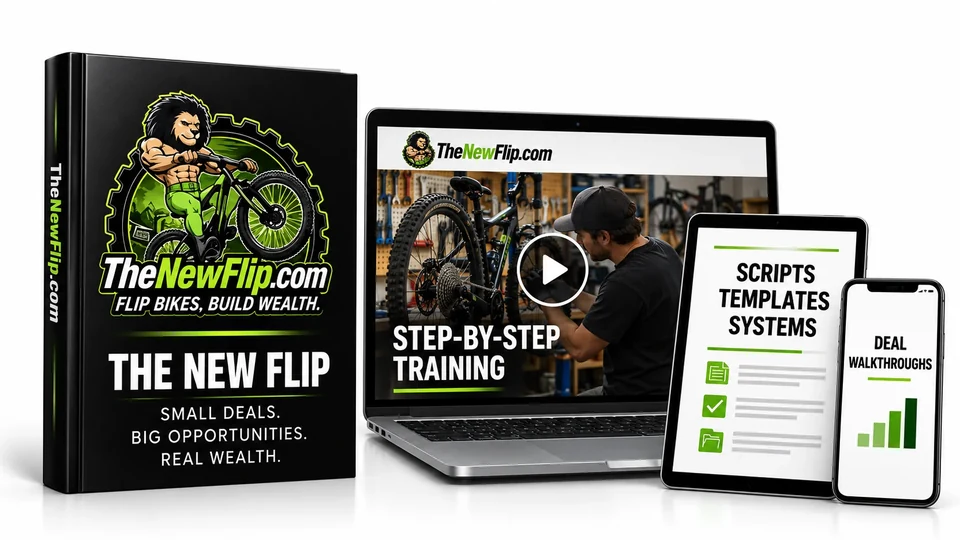
If hands-on buying and selling interests you, explore The New Flip Complete System and Bicycle Flipping Academy training. The $199 one-time offer is shown against a listed $1,500 comparison price, a $1,301 difference. Review the book, videos, scripts, templates, and training materials. Choose education that explains the work you want to practice, rather than treating a purchase as evidence that a business will succeed.
You can also start the free seller financing course at My Real Estate Dojo for property education. Bicycle transactions can provide practice in research, communication, and record keeping, but property transactions have additional responsibilities. Keep the subjects distinct. A useful lesson helps you understand a particular process and identify what you still need to learn before making a larger commitment.
Understand the bicycle-flipping responsibilities
A bicycle purchase should be based on the actual item. Confirm identity, investigate ownership and condition, research relevant comparisons, and consider the full work required. A seller’s asking price is not a completed resale result. If mechanical or structural safety is uncertain, get qualified help or decline the opportunity. Low cost does not remove the need for appropriate knowledge and responsible description.
You also need practical arrangements for inspection, collection, storage, preparation, photographs, buyer questions, and handover. An item may remain unsold longer than expected. Keep that possibility in the plan rather than assuming a fixed deadline. The educational value comes from understanding the complete transaction and reviewing your decisions. Purchasing inventory is one stage, not the whole business, and more purchases do not automatically resolve unfinished work.
Agree on the next step before doing the work
When a customer is interested, recap the scope, required inputs, timing, and how changes will be handled. For resale, confirm the item and meeting arrangement accurately. Do not promise something you have not verified simply to move the conversation forward. A clear recap gives both people a chance to correct a misunderstanding before time and money are committed on different assumptions.
If the task changes, pause and discuss the effect. Additional service work or different included items may require a new arrangement. Beginners sometimes feel that accepting every request is the only way to keep a customer. In practice, explaining a limit can be part of reliable service. Your goal is an agreement you can fulfill, not the largest possible promise at the moment of the inquiry.
Review the complete result
Keep a log of inquiries, agreements, completed work, payments, expenses, and time. Distinguish each stage. A proposed project is not completed revenue, and an unsold item’s asking price is not money received. Include unsuccessful attempts in the review because they also use resources. A consistent record helps you understand the actual work rather than remembering only the most encouraging event.
Choose one improvement based on observation. Perhaps customers need clearer input instructions or your listing needs better identification photographs. Make the change specific enough to test. Avoid responding to every difficulty by buying more software or switching business categories. The purpose of the first cycle is to learn what the process requires and which changes would make a second cycle more manageable.
Build a first-month learning plan
Organize the month around a sequence: define the offer, prepare a sample, research requirements, have customer conversations, and review an appropriate test. Fit the tasks around existing responsibilities. Do not make a major employment decision depend on an untested idea or one unusually favorable outcome. Learning can proceed while you preserve the time needed to understand costs, capacity, and consistency.
If bicycle flipping is your chosen learning project, review The New Flip Complete System and connect the lessons to your own checklist. For free property education, begin the seller financing course. A beginner’s strongest next step is one that produces useful evidence: a clearer offer, a completed exercise, or a better understanding of the responsibilities before the next commitment.

