
A search for a bicycle flipping business for sale can describe several different goals. You may want to acquire an existing operation, purchase inventory, learn the method, or obtain a hosted website and operating tools. Those are different transactions. Begin by identifying what you expect to own or access after paying. A polished website or a large feature list does not establish that customers, completed revenue, transferable assets, or software ownership are included.
Related bicycle-flipping video. Its original title and examples do not establish expected earnings.
Open the related video watch page
This guide explains the distinctions and the questions to investigate. The New Flip currently offers self-paced education and separate hosted launch arrangements. Its hosted system should not be described as purchasing an established profitable company with guaranteed leads. If you are considering an actual business acquisition, obtain appropriate independent legal, financial, and operational advice for that transaction. The advertised category alone cannot establish what transfers or whether the arrangement fits your circumstances.
Define the object of the purchase
Write a plain-language description of what you intend to receive: company ownership, identified assets, inventory, intellectual property rights, a service arrangement, educational access, or hosted software access. More than one may be involved, but each should be explicit. Do not allow a broad phrase such as turnkey business to substitute for a list of actual deliverables, rights, exclusions, and continuing obligations.
Ask the seller or provider to connect each claim with the relevant agreement and evidence. If an established customer base is promised, investigate what that means and whether it is actually transferable. If the offering is technology access, identify its operating terms. Your research should keep a tangible asset, an ongoing service, and a hoped-for future result in separate categories rather than combining them into a single attractive picture.
Distinguish education from acquisition
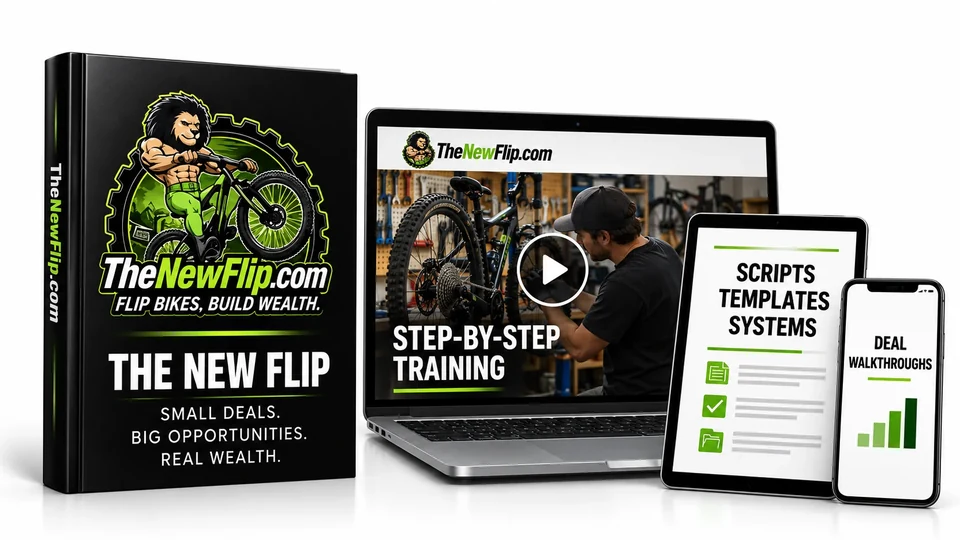
A course teaches a process. It does not automatically transfer a trading company, stock, customer records, a website, or software rights. The New Flip Complete System is currently $199 one time for the book and listed educational materials. Review the current product page for videos, manuals, scripts, templates, and examples. The package is separate from community, individual coaching, and hosted business technology.
Choose education when the immediate need is understanding the buying-and-selling work. That decision can precede any later operating commitment. A resource may help you ask better questions without making the business suitable for every reader. Your knowledge, market, purchasing decisions, costs, and execution still affect the result. Keep the training purchase separate from any claim that a ready source of customers or completed sales is included.
Understand the current Self-Launch offering
The product page currently describes Self-Launch at $1,500 upfront plus $150 per month. Its stated scope includes a hosted bicycle-buying and resale system with website, AI pricing, CRM, follow-up, inventory, shop, reports, and the book. Lifetime Community is separate, and private coaching is not included in that option. Verify the current scope and terms before deciding because offerings can change.
Hosted access continues through the subscription arrangement. It is not the same as unrestricted ownership of source code, infrastructure, or every administrative capability. Ask what you can operate, which functions the provider manages, and what happens if the subscription ends. Those questions are part of evaluating a service. They should be answered before assuming the word business means every underlying technical asset transfers to you.
Understand the current Guided Launch offering
Guided Launch is currently listed at $3,000 upfront plus $150 per month. The page describes the same hosted system and four weeks of one-on-one coaching. The book is included, while Lifetime Community remains separate. The recurring fee supports hosted access; it should not be interpreted as an indefinite extension of the four-week private coaching period. Review the actual terms for your intended purchase.
Compare the additional guidance with the specific help you need. You may want support applying a process, while another operator may prefer a self-directed arrangement. Neither selection establishes demand or guarantees results. A clear comparison asks what service is provided, for how long, and what remains the operator’s responsibility. Avoid turning a support package into an assumption that someone else performs every daily business task.
Investigate an existing operation differently
If the listing concerns an established business, identify the actual assets and obligations involved. Request appropriate records and engage independent advisers to evaluate the transaction. A summary revenue figure or screenshot does not establish the complete economics. You need to understand what the figure measures, the reporting period, expenses, unfinished commitments, and whether the underlying arrangement can continue after a transfer.
Do not rely on a general blog to value the acquisition or determine the legal structure. Prepare questions about inventory, customer arrangements, supplier relationships, accounts, intellectual property, liabilities, and operational dependence on the current owner. The appropriate due diligence depends on the actual transaction. Keep unresolved items visible rather than assuming they are favorable because the listing describes a ready-to-run opportunity.
Examine any inventory included
A quantity of bicycles is not the same as an established resale result. Identify each item, condition information, ownership evidence, preparation needs, and status. Advertised selling prices are not received payments. If inventory is part of an acquisition, obtain appropriate assessment and understand how its condition and documentation are represented in the agreement rather than relying on a combined headline value.
Consider the practical handling too. Where will the items be stored, how will they move, and what work is unfinished? A large inventory can create immediate responsibilities instead of immediate income. Your own space, knowledge, transport, and schedule matter. Do not let the number of included items make the arrangement appear simpler than managing one complete transaction would actually be.
Review the customer-generation claims
Ask whether a statement describes a technical capability, an existing record, or a future expectation. A form can collect inquiries, but its presence does not establish that relevant people will submit them. A follow-up tool can send a configured message, but it does not guarantee a completed transaction. A public shop can display inventory without determining how quickly or at what price it sells.
Keep those distinctions in the comparison. Investigate what the operator must do to attract customers, review inquiries, assess bicycles, and respond appropriately. Technology can support the workflow while leaving important judgment and execution with you. A resource is easier to evaluate when its capabilities are described accurately rather than expanded into an outcome the provider cannot establish for every market and operator.
Budget for the entire operating arrangement
Separate upfront payments, recurring services, inventory purchase money, transport, storage, outside assistance, and selling expenses. Add other costs relevant to the actual business and jurisdiction. Read renewal and cancellation terms directly. A low entry payment does not explain the continuing commitment, and a higher upfront price does not establish that all future operating expenses have been covered.
Create a scenario that includes slower sales and unfinished inventory. Label assumptions and identify which need evidence. The purpose is not to produce a pleasing forecast; it is to understand what resources remain tied up if the expected timing changes. A business offering should be evaluated within your actual capacity, not a hypothetical version that assumes uninterrupted demand and no additional work.
Ask what the operator still does
List the responsibilities that remain after delivery of the purchase or setup. These may include reviewing leads, verifying facts, making buying decisions, arranging inspections, collecting inventory, preparing listings, answering buyers, and completing handovers. For bicycles, get qualified help when condition concerns exceed your ability to assess. An operating dashboard does not turn uncertain information into a supported safety or value conclusion.
Use the list to compare the arrangement with your available time. Some tasks require physical access or a scheduled meeting, not merely a few spare minutes online. If the work does not fit, identify whether a different scope or additional resources would be necessary. A turnkey label is useful only when the remaining responsibilities are clear enough for you to judge whether you can fulfill them.
Make the decision reviewable
Before committing, write the selected option, what transfers or is provided, what is excluded, payment structure, continuing responsibilities, and open questions. Verify the current offering and obtain suitable independent advice where the transaction requires it. Keep the final choice tied to actual documents and evidence. An existing acquisition, self-paced training, and hosted setup can each serve different goals, but none should be represented as an automatic route to profit.
If you want to begin by learning the method, review the educational offer before considering more extensive technology or ownership arrangements. If you need a hosted setup, examine the operating terms separately. The strongest next step is one you can explain in concrete terms: what you receive, how you use it, what you still do, and which result remains uncertain. That clarity matters more than the appeal of a broad sales label.
Choose your next learning resource
If you want structured bicycle-flipping education, review The New Flip Complete System and Bicycle Flipping Academy training. The current offer is $199 one time, displayed against a listed $1,500 comparison price, a $1,301 difference. Review the book, videos, manuals, seller scripts, purchase offers, ad copy, and deal examples on the product page. This self-paced educational package is separate from optional community, individual coaching, and hosted business technology. Choose the resource because its stated contents address a skill you want to study, rather than assuming that a purchase establishes customers, suitable inventory, sales, or profit.
For a free introduction to property education, start the seller financing course at My Real Estate Dojo. That is a separate subject, not a free edition of the paid bicycle-flipping package. Keep each activity’s responsibilities distinct and seek qualified help for questions outside your knowledge. When you are ready to continue, explore The New Flip Complete System, or begin with the free seller financing course. Connect the lesson to one manageable exercise, record what you learn, and use that evidence to choose a responsible next step.

