
A bicycle flipping business book PDF can be useful because the material is easy to revisit alongside your own notes. The file format alone does not establish that the guide is complete, current, or suitable for your needs. Before downloading or buying, investigate the legitimate source, the stated contents, and the delivery arrangement. Then decide how the material will support a practical learning process rather than become another unread file in a folder.
Related bicycle-flipping video. Its original title and examples do not establish expected earnings.
Open the related video watch page
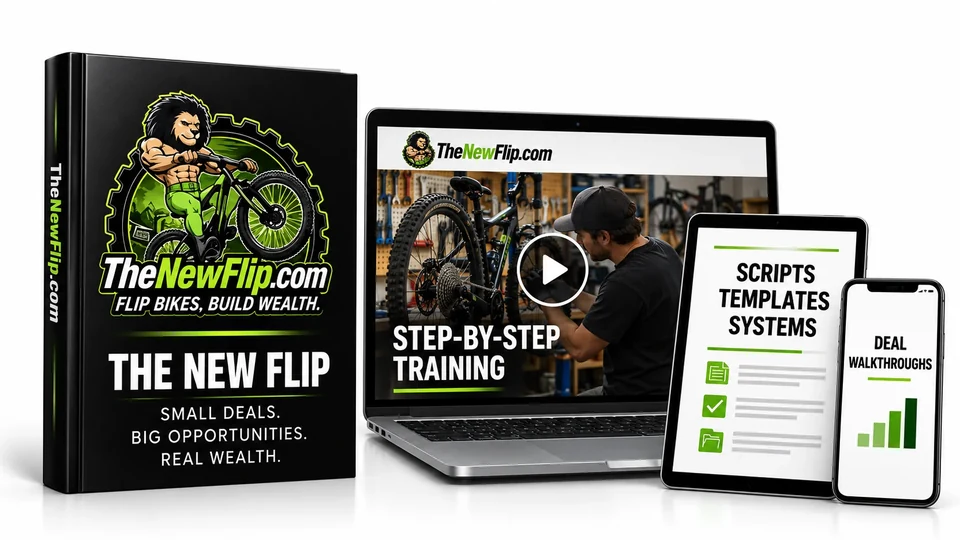
The New Flip Complete System is a paid educational offer that includes the book and supporting materials. Check the current product page for delivery and format details instead of assuming a particular file type or feature. This article does not provide an unauthorized copy or promise a free edition of the paid book. It explains how to evaluate digital learning resources and use them responsibly in a bicycle-flipping study plan.
Verify the source before opening the resource
Use the author or authorized provider’s stated access route. A search result containing a book title and the word PDF does not establish permission, accuracy, or a trustworthy file. Avoid supplying account information to an unfamiliar site merely because it promises a download. Investigate the actual source and what is being offered before treating the result as a legitimate edition of the resource you wanted.
Keep a record of the source, purchase or access terms, and the title of the material. This helps distinguish an official guide from a third-party summary, sample, or unrelated document. If access is unclear, ask the provider directly. You do not need to resolve the issue by searching for an unofficial copy when the correct next step is understanding how the stated offer is delivered.
Separate format from educational scope
A PDF may contain a short checklist, a sample chapter, or a complete manual. Those are different resources even when the filenames look similar. Review the contents and exclusions. Does the material explain the complete buying-and-selling sequence, or only one task? Does it provide examples you can understand? The useful comparison concerns what the guide teaches, not simply whether it can be downloaded.
For a package that includes written and video materials, identify how the parts connect. A digital book may explain the method while a video demonstrates a particular stage. Working templates may support communication or records. Do not assume every file repeats the same lesson or that one download includes every optional product discussed elsewhere. Clear scope makes the resource easier to use and evaluate.
Create a study copy and a separate decision record
Keep the original resource organized so you can find the relevant section later. Put your own transaction notes in a separate record. This avoids confusing a teaching example with evidence about a current bicycle. A hypothetical number in a guide should not quietly become a confirmed estimate in your local purchase worksheet merely because the two documents sit beside each other.
Use clear filenames and dates for your notes. Record the lesson, the question it addresses, the exercise you completed, and what remains uncertain. A simple structure is enough. The objective is to preserve meaning, not create elaborate administration. You should be able to return after several days and tell which statements came from the material and which you confirmed through your own research.
Read for decisions rather than slogans
At each section, ask what decision the lesson helps you make. It may explain which information to request, how to compare an item, or how to describe a supported fact. Write the decision in plain language. If a passage is only motivational, recognize it as encouragement rather than a substitute for the evidence required before a purchase.
Then identify a practical exercise. A useful resource becomes easier to judge when you can apply one lesson to a sample listing or a draft message. You do not need to buy a bicycle to test every concept. Preparing an identity record, identifying missing information, and writing an accurate description can reveal whether the material has improved your understanding before inventory creates a new commitment.
Keep model identification tied to the actual item
Use the guide’s research structure to record the seller’s stated model, size, configuration, and included items. Distinguish visible markings from reported or unknown details. A book can explain how to investigate, but it cannot identify every bicycle for you or establish that a local listing matches a catalog version. Keep the actual photographs and evidence associated with the item record.
If you cannot confirm an important detail, write the question rather than guess. A completed-looking checklist is not the goal. An accurate account of uncertainty helps you decide whether to request information, seek qualified help, or pass. This is one way to turn reading into a business habit: the record becomes a tool for supported decisions rather than proof that you finished a chapter.
Adapt communication materials accurately
If the package provides scripts or offers, examine why each sentence belongs. Adjust the wording to the actual bicycle and stage of the conversation. Do not copy a claim you cannot support or promise a purchase before required clarification or inspection. A template should reduce the effort of composing a message without replacing your responsibility for its meaning.
Draft a practice message and annotate its parts. Identify the item, request evidence, state the condition, and explain the next step. Then read it from the other person’s perspective. Could it imply something different? This exercise is more useful than memorizing a script because it teaches you how to adapt the structure when facts, logistics, or customer needs change.
Separate no-repair resale from ignoring condition
The New Flip’s method focuses on suitable bicycles to buy and resell as they are, rather than repair projects. A written guide should be used within that scope. It does not establish that every discounted item is appropriate. You still need condition awareness and qualified assistance when a mechanical or structural concern exceeds your ability to assess it.
Record your purchase boundaries beside the relevant lesson. What would make an item unsuitable for your process? What evidence is needed before continuing? Clear boundaries help when an attractive asking price creates pressure to reinterpret uncertainty favorably. The digital manual supports the decision, but the actual facts and your competence determine whether the next step is responsible.
Use examples without copying their outcome assumptions
A worked example can show sequence and arithmetic. It does not establish what you will pay, what a buyer will offer, or how quickly a sale will occur. Record the figures actually stated and identify omitted expense categories. Do not assume that a teaching example supplies a forecast for a different item and market. Keep illustrative numbers separate from your actual transaction record.
Build your own worksheet with purchase, transport, preparation, outside help, selling expenses, shared costs, and time where relevant. Mark assumptions visibly. An unsold item’s asking price is not received revenue. The useful lesson is how the calculation works and which evidence it needs. That understanding remains valuable even when your research leads to a decision not to buy.
Check access questions before purchasing
Ask how the resource is delivered, which materials are included, and what the current terms say about access. If you need a particular format or accessibility feature, verify it before checkout rather than infer it from a screenshot or old review. A provider’s current description should guide the decision. Keep the selected offer distinct from optional community, coaching, or hosted technology arrangements.
Save the relevant product information and receipt. This helps you understand what was purchased if you consider another option later. The objective is a clear educational choice, not collecting every file available. A resource should fit a learning question you can state and an exercise you can complete. If the scope remains unclear, clarification is a useful next step.
Build a repeatable reading-to-practice routine
Choose one section, write the question it answers, complete a manageable exercise, and review the result. Keep the original material and your evidence separate. Over time, the notes should make decisions clearer rather than merely record pages read. A legitimate digital guide is most useful when it becomes part of a careful process that respects the limits of the material and your current knowledge.
Before pursuing the next listing, identify the lesson you can apply and the facts you still need. Learning is not complete because a download succeeded. It becomes useful when it improves your questions, communication, and judgment. Use the book as a working reference while keeping the actual transaction, costs, condition, and customer promises grounded in evidence you can support.
Choose your next learning resource
If you want structured bicycle-flipping education, review The New Flip Complete System and Bicycle Flipping Academy training. The current offer is $199 one time, displayed against a listed $1,500 comparison price, a $1,301 difference. Review the book, videos, manuals, seller scripts, purchase offers, ad copy, and deal examples on the product page. This self-paced educational package is separate from optional community, individual coaching, and hosted business technology. Choose the resource because its stated contents address a skill you want to study, rather than assuming that a purchase establishes customers, suitable inventory, sales, or profit.
For a free introduction to property education, start the seller financing course at My Real Estate Dojo. That is a separate subject, not a free edition of the paid bicycle-flipping package. Keep each activity’s responsibilities distinct and seek qualified help for questions outside your knowledge. When you are ready to continue, explore The New Flip Complete System, or begin with the free seller financing course. Connect the lesson to one manageable exercise, record what you learn, and use that evidence to choose a responsible next step.

