
A bicycle flipping course should make the work behind a transaction understandable. Before choosing training, compare its stated curriculum with the decisions you would actually make: researching the bicycle, asking questions, assessing suitability, arranging handling, preparing an accurate offer, and reviewing the outcome. A course title or a dramatic case study does not establish that every stage is explained. Begin with your learning needs and look for a coherent process you can study and practice.
Related bicycle-flipping video. Its original title and examples do not establish expected earnings.
Open the related video watch page
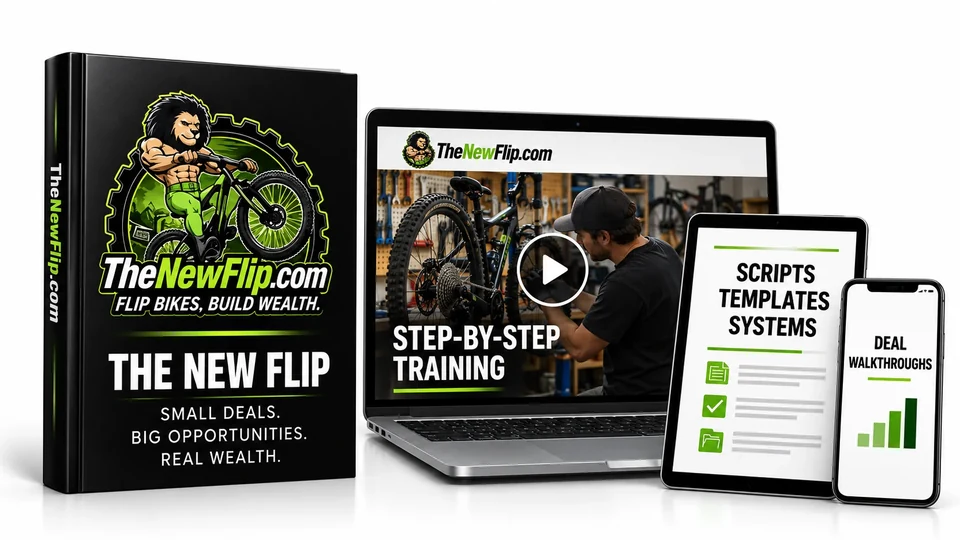
The New Flip Complete System combines the book with supporting training materials. This guide offers a framework for evaluating that educational package or another course without pretending to have audited every competitor. Verify current contents and access directly with the provider. Education can organize information and supply examples, but it does not create guaranteed inventory, customers, sales, or profit. You remain responsible for decisions and execution within your actual knowledge and resources.
List the tasks the course should address
Write the full transaction sequence before reading the sales page. Include identification, condition and ownership questions, comparisons, seller communication, purchase boundaries, collection, storage, photographs, listing, buyer replies, handover, and records. Then mark which tasks the offering explicitly covers. A gap is a question to investigate, not something to assume is included because the package sounds comprehensive.
Keep your priorities visible. You may already understand one stage and need help with another. A useful comparison identifies that need rather than treating every resource as equally valuable. If the provider supplies a curriculum or contents list, use its actual wording and ask focused questions. Clear scope lets you evaluate the resource without turning a general promise into an imagined course with features never stated.
Examine how written and video materials connect
Written explanations can provide a reference structure, while video examples can illustrate a particular stage. Ask how the package uses each format. A collection of unrelated clips may serve a different purpose from a connected sequence. You should understand where to begin and how to find the lesson relevant to the decision in front of you.
Plan how you will use the formats within your schedule. If you study in short sessions, a written task summary may help you return to an unfinished exercise. If a video introduces a question, note it and investigate rather than assuming the next clip resolves it. The resource becomes useful through deliberate study, not simply because a large amount of media is available in an account.
Look for practical exercises
A course should support something you can do and review. Useful exercises might include an identity record, a comparison worksheet, a seller message, a sample listing, or a transaction review. You can practice many of these without buying inventory. This helps a beginner evaluate understanding before physical items and purchase money create additional responsibilities.
Define what completion means for the exercise. An identity record should distinguish confirmed and unknown details. A seller message should make the next step clear. A sample listing should match supported information. These standards are more useful than marking a lesson watched. The objective is an observable improvement in how you investigate and communicate, including the ability to recognize when the evidence does not support continuing.
Understand the no-repair method accurately
The New Flip’s stated approach focuses on suitable bicycles to resell as they are, rather than repair projects. Condition still matters. Training should not be interpreted as permission to ignore problems or make unsupported safety claims. When a mechanical or structural issue exceeds your competence, obtain qualified help or decline the opportunity. A low asking price does not resolve uncertainty about the actual item.
Ask whether the course’s intended workflow matches the activity you want to perform. Someone seeking extensive repair instruction may need a different learning resource. Someone seeking transaction education should examine the research, communication, marketing, and record-keeping lessons. Clear matching prevents a course from being judged against a curriculum it did not promise or purchased for a task outside its stated scope.
Review examples for evidence and limits
A case study should be understood as the reported experience it describes. Identify what was known before the purchase, which tasks are demonstrated, what figures are stated, and what remains unexplained. Do not treat the title’s strongest number as a forecast. Outcomes can depend on product knowledge, local demand, costs, timing, and the operator’s actual work.
Keep illustrative calculations separate from your own transaction record. A price difference may omit expenses or time. An advertised figure may not be a completed payment. A useful course helps you ask those questions rather than encourages you to assume every example repeats. You can learn from a historical result while preserving uncertainty about the bicycle and circumstances you are currently investigating.
Inspect the purpose of working templates
Scripts, purchase offers, ad copy, and record structures can reduce the effort of starting from a blank page. Their usefulness depends on understanding and adapting them. Identify what each template is intended to do and which facts must be supplied. Remove statements that are untrue or inappropriate for the current conversation. A template should support accurate communication rather than make decisions automatically.
Practice with a fictional or clearly identified learning example. Read the message from the other person’s perspective and look for unintended commitments. Does it promise a purchase before inspection? Does it imply an included accessory? Does it claim a condition you have not confirmed? These questions reveal whether you understand the tool. Copying the words without that understanding can produce a polished message with an inaccurate meaning.
Separate education from optional support
The current Complete System is a self-paced educational package. Community, private coaching, and hosted business arrangements have separate scopes and payment terms. Do not assume they are included because the sales page discusses them nearby. Read the selected option and its exclusions directly. If personal guidance is important, identify the actual arrangement rather than infer unlimited access from a general support phrase.
Likewise, a course demonstration involving software does not establish that the educational package includes hosted access or software ownership. Ask what the purchase provides now and what would require another agreement. A clear distinction helps you choose the next resource based on your actual need. You do not need to buy every option before learning the basic transaction process.
Check delivery and access before paying
Confirm how the materials are provided, which formats are available, and what the current terms state. If an accessibility or delivery requirement matters to you, ask explicitly. A remembered screenshot or third-party summary may not describe the current offering. Keep the source and date with your purchase notes so you can distinguish the stated arrangement from optional products considered later.
Also consider your available study time. The course cannot do the reading and practice for you. Choose a realistic first milestone and a review point. For example, you could complete an identity exercise and draft a seller question before considering any purchase. A manageable plan makes the resource easier to use than a broad intention to consume every lesson without a connection to a specific decision.
Evaluate the complete learning cost
Training is separate from inventory money and operating expenses. If you later buy a bicycle, account for transport, storage, preparation, qualified assistance, selling costs, and time where relevant. Do not treat the course price as the full business budget. A resource can be affordable as education while the intended operating arrangement requires resources you have not yet planned.
Keep the choice tied to the learning gap. You might need a connected explanation, adaptable materials, or a more focused exercise. Another person may choose to continue with public lessons for now. The useful decision is the one whose purpose and scope you can explain. Price alone does not establish educational suitability, and paying does not establish a future financial result.
Review progress through practical decisions
After working through a lesson, ask what you understand more clearly and what you still cannot responsibly assess. Record one change to your process. A decision to pass on an unsuitable item can show useful learning just as a clearer listing can. Do not use ownership of inventory as the only measure of whether the course has been applied.
Choose the next lesson based on an observed question and repeat the exercise-and-review cycle. A bicycle flipping course is most useful when it supports better research, clearer communication, accurate marketing, and honest records. Keep those outcomes distinct from income promises. Your next step should fit the evidence, your capabilities, and the actual work required, rather than the excitement created by another person’s strongest reported result.
Choose your next learning resource
If you want structured bicycle-flipping education, review The New Flip Complete System and Bicycle Flipping Academy training. The current offer is $199 one time, displayed against a listed $1,500 comparison price, a $1,301 difference. Review the book, videos, manuals, seller scripts, purchase offers, ad copy, and deal examples on the product page. This self-paced educational package is separate from optional community, individual coaching, and hosted business technology. Choose the resource because its stated contents address a skill you want to study, rather than assuming that a purchase establishes customers, suitable inventory, sales, or profit.
For a free introduction to property education, start the seller financing course at My Real Estate Dojo. That is a separate subject, not a free edition of the paid bicycle-flipping package. Keep each activity’s responsibilities distinct and seek qualified help for questions outside your knowledge. When you are ready to continue, explore The New Flip Complete System, or begin with the free seller financing course. Connect the lesson to one manageable exercise, record what you learn, and use that evidence to choose a responsible next step.

