
A bicycle flipping book is most useful when it changes how you investigate and explain a transaction. Reading a success story can introduce the subject, but a practical guide should help you identify the information needed before buying, the work after acquisition, and the records that make the outcome understandable. Choose a learning goal before opening the next chapter so the reading leads to a specific exercise instead of a general feeling of motivation.
Related bicycle-flipping video. Its original title and examples do not establish expected earnings.
Open the related video watch page
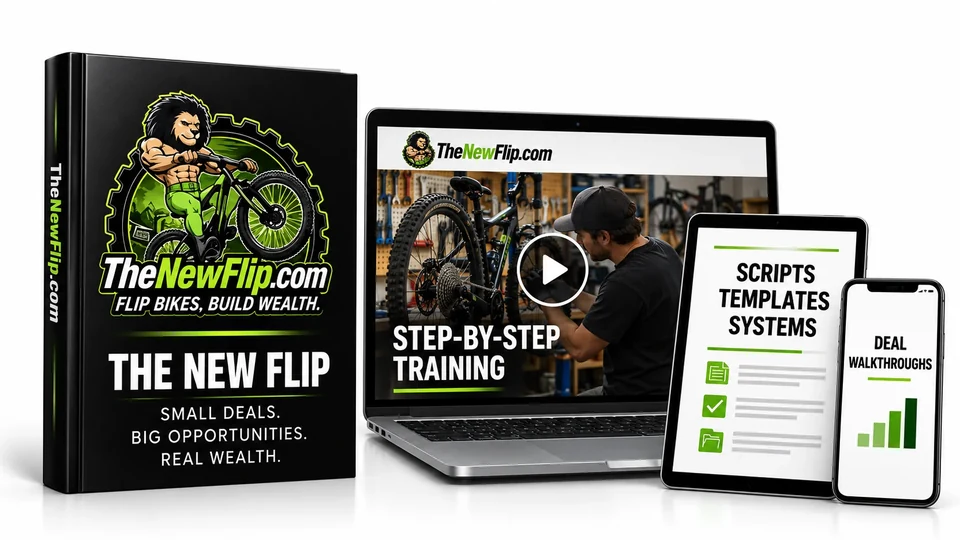
The New Flip Complete System includes the book and supporting educational materials. This article explains a way to use that kind of written reference. It is not a transcript of the book or a promise about individual results. The current offering should be reviewed directly for contents and terms. You still need to study, investigate the actual bicycle, make your own purchase decision, and get qualified help where a concern exceeds your knowledge.
Choose a question for the reading session
Start with a task you want to understand: confirming identity, asking a seller for evidence, comparing relevant listings, preparing a sales description, or reviewing expenses. Write the question in plain language. A clear question helps you select the relevant lesson and decide whether the material answered it. You do not have to complete every page before beginning a manageable practice exercise.
At the end of the session, record one principle, one action, and one unresolved point. This keeps the reading connected to decisions. If you remember only a striking resale number, revisit the example for the information and work behind it. A written guide can be returned to repeatedly, so use that advantage to examine the reasoning instead of treating the chapter as a one-time motivational event.
Understand the complete transaction structure
Map research, seller clarification, assessment, purchase decision, collection, preparation, listing, buyer communication, handover, and review. Identify which stage the chapter addresses. This prevents one detailed lesson from being mistaken for the whole business. The ordinary work between purchase and sale is part of the process even when it receives less attention in a short summary.
Keep the map simple enough to use. Each stage should identify a decision or a next action, not merely add another label. For a possible purchase, the next action may be requesting a photograph rather than estimating a resale figure. For an owned item, it may be preparing accurate images or resolving an unanswered question. The book becomes a reference for the stage you actually face.
Create an identity worksheet beside the chapter
Use a sample listing and record the stated brand, model, size, configuration, condition information, and included accessories. Mark which details are visible, reported, or unknown. Keep the actual photographs with the record. A book can teach a research method without establishing the facts about every bicycle you encounter. The worksheet should preserve that distinction.
Avoid filling an unknown with the specification of a similar catalog version. If a detail matters, seek better evidence. The research can end with a decision to stop when the actual item cannot be understood well enough. This is a legitimate application of the learning. A complete-looking worksheet that hides guesses is less useful than a short record that accurately identifies the question preventing a purchase.
Use condition lessons within appropriate limits
The no-repair resale approach focuses on finding suitable bicycles to resell as they are. It does not mean treating every item as suitable or ignoring a problem. A book may introduce observations, but it does not certify your ability to assess every mechanical or structural issue. Get qualified help when needed or decline an opportunity outside your knowledge and resources.
Write your own purchase boundaries next to the relevant notes. What evidence is essential, and what concern would make you pass? These boundaries can help when an attractive price creates pressure to reinterpret uncertainty favorably. The written method should support a careful decision. It should not be used as reassurance that a problem will be inexpensive or that an unknown condition can be presented confidently to a buyer.
Adapt scripts rather than repeat them blindly
If the package includes communication materials, examine what each part accomplishes. A sentence may identify the bicycle, request information, clarify a condition, or propose a next step. Adjust it to the actual conversation. Remove claims you cannot support. A script saves composition effort while leaving responsibility for the message’s meaning with the person sending it.
Draft a practice message and read it as the seller. Does it imply that you have already decided to buy? Does it ask a question the seller can answer? Is the inspection condition clear? Reviewing the wording is a useful learning exercise even without contacting anyone. It helps you understand the logic of the tool so you can adapt it responsibly when facts and circumstances differ.
Turn marketing lessons into an accurate sample listing
Use only supported details from the identity record. Explain the item, actual included accessories, relevant condition information, and the next step. Plan photographs that help a buyer evaluate the offer. Avoid repeating a claimed original value as a current appraisal or borrowing specifications to make the description more attractive. Persuasion should be grounded in the real bicycle.
Ask another person what they believe is offered. Their answer can reveal an unintended promise or an omitted detail. Revise the sample accordingly. This connects a book lesson with customer expectations and gives you something observable to review. The goal is a listing that the eventual item and handover can fulfill, rather than wording that generates inquiries by overstating the evidence.
Examine examples without forecasting your result
A worked transaction can show the relationship between decisions and numbers. Record what is actually stated and what is omitted. Purchase and sale alone may not explain all direct expenses, shared costs, or time. Keep missing categories visible. A historical outcome can be informative without establishing a typical margin or a likely timeline for your own local purchase.
Build a separate worksheet for your actual or hypothetical item. Mark assumptions, record sources, and distinguish asking prices from completed payments. An unsold bicycle is not received income. Use the book to improve the structure of your analysis rather than copy another example’s most favorable inputs. The quality of the decision depends on the evidence for the current item, not the attractiveness of the teaching example.
Keep notes usable during the real workflow
Organize your notes by task so the relevant lesson can be found when a question arises. A long collection of highlighted passages is less useful if you cannot connect it to the current decision. Keep brief summaries in your own words and link them to the source section. Separate the author’s explanation from your observations and unverified assumptions.
When a lesson changes your process, record the change specifically. You might request identifiers earlier, clarify included items, or update costs immediately. These actions can be practiced and evaluated. A broad intention to become better at business is harder to review. The written reference is useful when it supports repeatable habits that make the next transaction clearer rather than simply adding more reading to your schedule.
Compare the book with the complete educational offer
The current Complete System includes more than a book alone. Review its videos, manuals, scripts, templates, ad copy, and examples directly on the product page. Separate those educational materials from optional community, private coaching, and hosted technology. A clear scope helps you decide which resource addresses your learning question without assuming every demonstration includes every service shown elsewhere.
If you need a specific delivery format or access feature, ask before purchasing. Keep the current product description and receipt. The point is a reviewable educational decision. A large collection of resources does not remove the need to study, and a lower price does not establish that a short resource covers the whole process. Match the stated contents with the task you actually want to learn.
Review learning through your own decisions
After an exercise or appropriate completed transaction, ask what information was missing and which lesson helped. Review disappointing outcomes as carefully as favorable ones. Selective records make future decisions less informed. The useful conclusion may be another practice session, qualified assistance, or a decision to avoid a category outside your present capabilities.
Choose one improvement for the next session and return to the relevant section. A bicycle flipping book should remain a working reference rather than a certificate that all knowledge has been acquired. Its value comes from the connection between reading, evidence, communication, and review. Keep that connection clear and judge progress by what you can responsibly explain and do, not merely by finishing the final page.
Choose your next learning resource
If you want structured bicycle-flipping education, review The New Flip Complete System and Bicycle Flipping Academy training. The current offer is $199 one time, displayed against a listed $1,500 comparison price, a $1,301 difference. Review the book, videos, manuals, seller scripts, purchase offers, ad copy, and deal examples on the product page. This self-paced educational package is separate from optional community, individual coaching, and hosted business technology. Choose the resource because its stated contents address a skill you want to study, rather than assuming that a purchase establishes customers, suitable inventory, sales, or profit.
For a free introduction to property education, start the seller financing course at My Real Estate Dojo. That is a separate subject, not a free edition of the paid bicycle-flipping package. Keep each activity’s responsibilities distinct and seek qualified help for questions outside your knowledge. When you are ready to continue, explore The New Flip Complete System, or begin with the free seller financing course. Connect the lesson to one manageable exercise, record what you learn, and use that evidence to choose a responsible next step.

